Malört DURING PROHIBITION
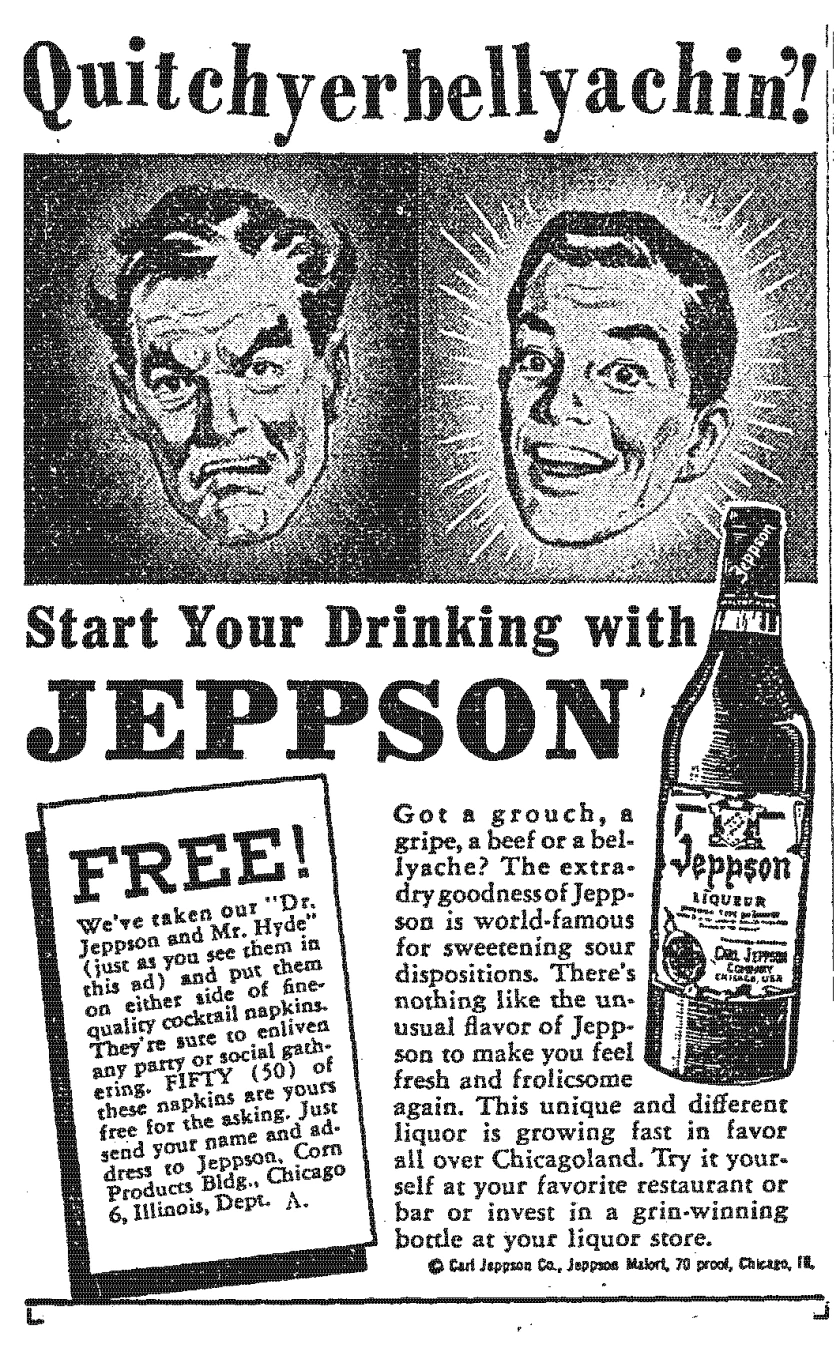
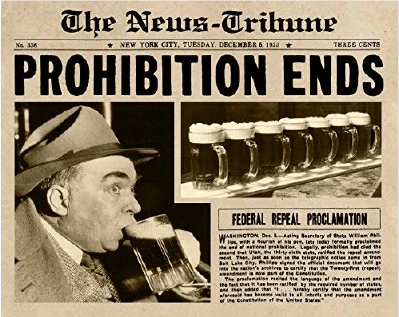
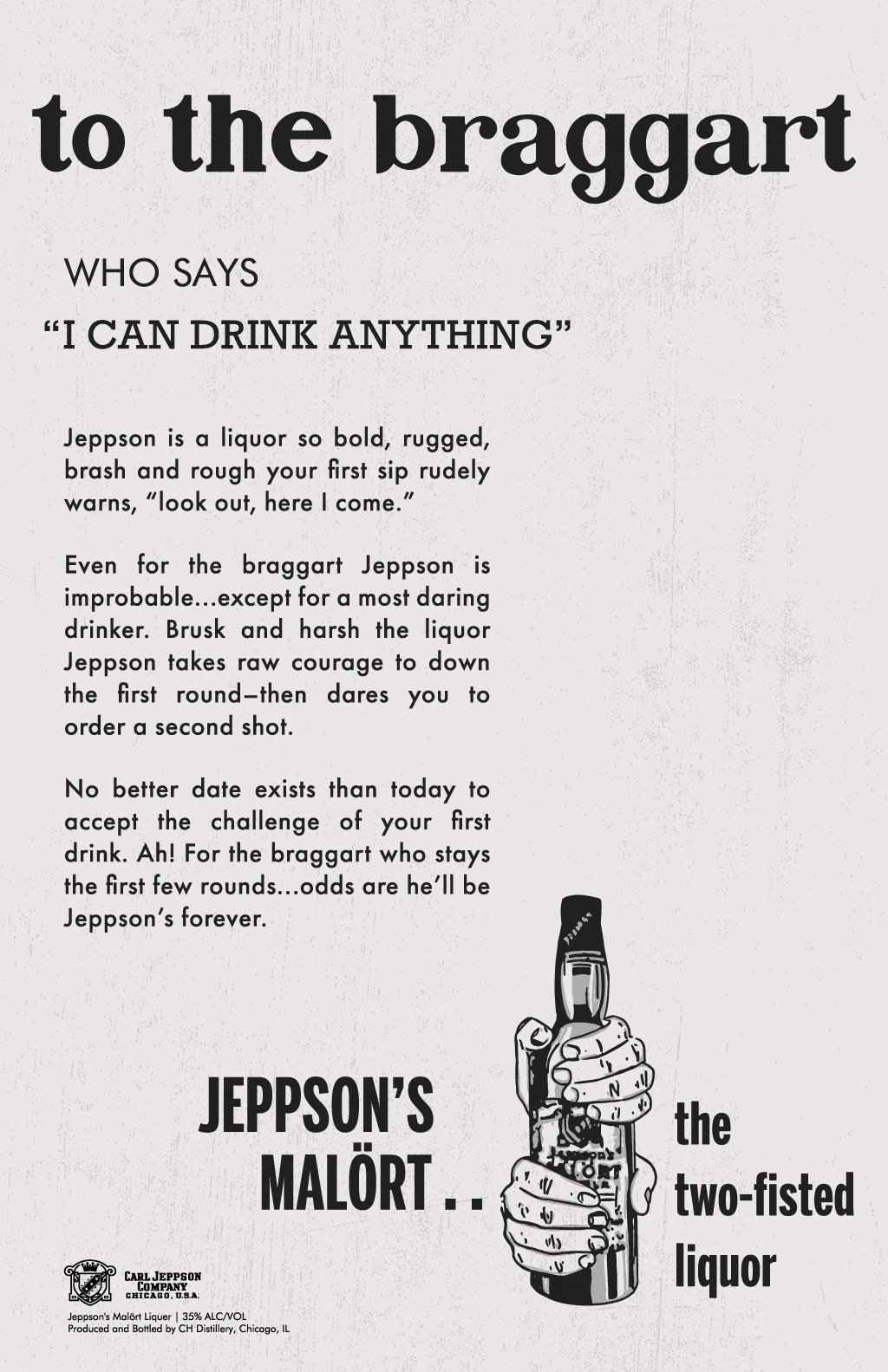
It’s the 1920s. Prohibition has just begun, and alcohol sales are banned nationwide. But Carl Jeppson is still making Malört. A Swedish immigrant and cigar maker by trade, Carl had brought with him a bitter wormwood spirit, Malört, from his home country . To keep selling it legally, he labeled Malört as medicinal, a remedy for stomach worms. Wormwood had long been associated with digestive cures, so the claim gave him just enough cover. Eventually, the authorities caught wind. They showed up at his door to question him about these so-called medicinal sales. Carl calmly insisted it was not alcohol. It was medicine. The officers were skeptical.
They demanded to try it. Carl did not argue. He poured them each a glass. They took a sip...
After one taste, they had no further questions. The liquid was so terrible the officers reportedly agreed no one in their right mind would drink it recreationally. It had to be medicine. They moved on.
Malört sales continued through Prohibition. Carl was a working-class immigrant trying to make a living. His wife was a Chicago public school teacher. They navigated the Great Depression the way many families did, by adapting to whatever rules existed and finding a way forward. Malört survived not because it appealed to everyone, but because it stayed exactly what it was.